Precision Starts Before Surgery.
Guided implant surgery has rapidly shifted from a niche offering to a core part of modern implant workflows. With the integration of CBCT imaging, intraoral scanning, and digital planning software, clinicians can now place implants with a level of precision previously difficult to achieve with freehand techniques.
However, while guided surgery is often discussed as a clinical advancement, its success is equally dependent on what happens behind the scenes – particularly within the dental laboratory. From digital planning through to surgical guide fabrication and provisional prosthetics, your lab plays a critical role in ensuring accuracy, predictability, and ultimately, patient outcomes.
What is Guided Implant Surgery?
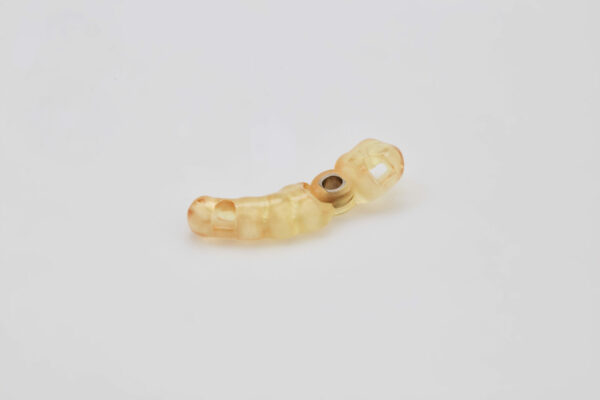
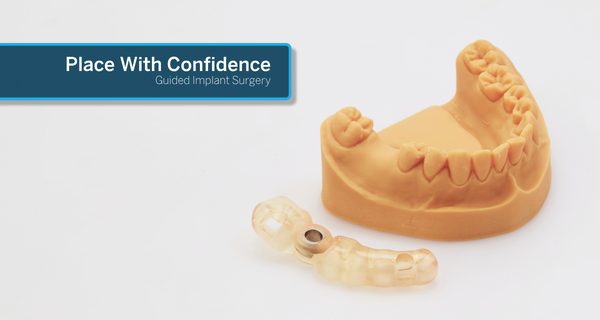
Guided implant surgery involves the use of a digitally designed and fabricated surgical guide that directs implant placement according to a pre-planned position. This planning typically combines CBCT data (for bone anatomy) with intraoral scans or models (for prosthetic outcomes).
Rather than placing implants based solely on anatomical availability, guided workflows allow for prosthetically driven implant placement – ensuring implants are positioned optimally for the final restoration.
The Shift to Prosthetically Driven Planning
One of the most significant advancements in implantology is the shift from “bone-driven” to “prosthetically driven” planning. This is where the laboratory becomes integral to the process early on.
In a guided workflow, the desired final restoration is often designed first. From there, implant positions are planned to support that outcome, considering factors such as emergence profile, occlusion, and aesthetics.
This approach requires close collaboration between the clinician and the lab from the outset. Without this alignment, even the most precise surgical execution can lead to compromised restorative outcomes.
Where labs like Andent Add Value
- Digital Planning Support
Many modern labs are now actively involved in implant planning, not just prosthetic fabrication. By working with CBCT and intraoral scan data, we can:
- Assist in ideal implant positioning based on the proposed restoration
- Identify potential prosthetic challenges early
- Ensure adequate spacing for materials and components
- Support full-arch and complex case planning
This collaborative planning phase is often where the greatest value is created, and where potential complications can be avoided before they arise.
- Surgical Guide Design & Fabrication
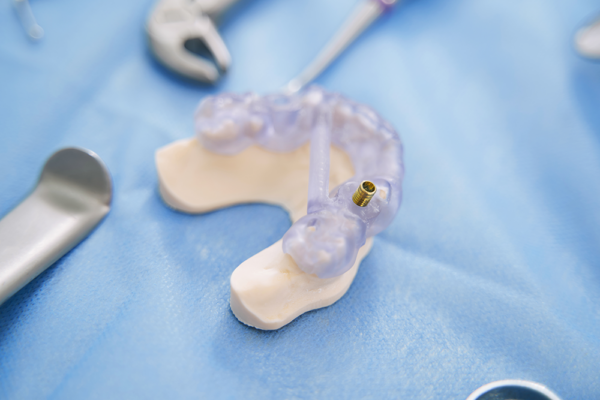
The surgical guide is the physical translation of the digital plan, and its accuracy is critical.
Laboratories are responsible for:
- Designing guides that fit precisely and are stable intraorally
- Selecting appropriate guide types (tooth-supported, mucosa-supported, or bone-supported)
- Ensuring correct sleeve positioning and compatibility with surgical kits
- Accounting for soft tissue thickness and access
Even minor inaccuracies in guide design or fit can translate into significant deviations at the time of surgery. This makes quality control, material selection, and manufacturing precision essential.
- Enabling Immediate Loading
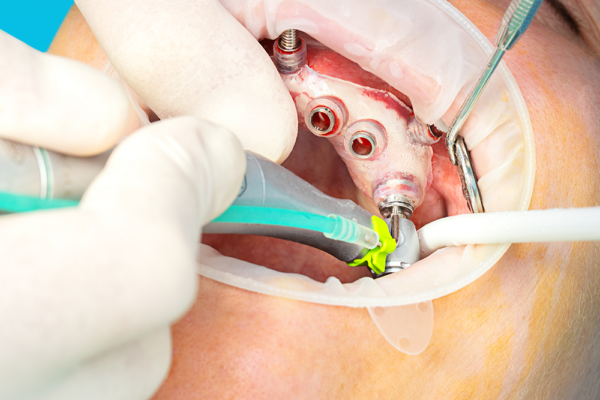
One of the major advantages of guided implant workflows is the ability to plan for immediate provisionalisation.
When planned correctly, the lab can fabricate a provisional prosthesis before surgery, allowing for same-day loading in appropriate cases. This requires:
- Accurate implant positioning
- Reliable primary stability (clinically achieved)
- Precise alignment between the surgical plan and prosthetic design
The lab’s ability to pre-design and manufacture provisionals significantly enhances efficiency and patient experience, particularly in full-arch cases such as All-on-X.
- Prosthetic Outcome Optimisation
Guided surgery is not just about placing implants accurately – it’s about placing them in the right position for long-term prosthetic success.
The lab ensures:
- Correct angulation for screw-retained restorations
- Optimal emergence profiles
- Balanced occlusion and load distribution
- Aesthetic integration with surrounding dentition
This prosthetic-first mindset is what ultimately differentiates a technically successful implant from a clinically successful outcome.
Clinical Benefits of a Lab-Integrated Workflow
When the lab is engaged early and effectively, guided implant cases can deliver several key advantages:
Improved Accuracy
Digitally planned and guided placement reduces positional errors and improves consistency.
Reduced Surgical Time
Pre-planning and guide use streamline the surgical process.
Lower Risk of Complications
Better planning reduces the likelihood of anatomical complications and prosthetic compromises.
Predictable Outcomes
Clinicians can visualise and plan the final result before surgery begins.
Enhanced Patient Experience
Shorter treatment times and immediate restorations improve patient satisfaction.
Considerations for Success
While guided workflows offer significant benefits, they are not without challenges. Key considerations include:
- Data accuracy: Errors in scans or CBCT alignment can impact the entire workflow
- Guide fit: Stability and seating must be verified clinically
- Communication: Clear collaboration between clinician and lab is essential
- Case selection: Not all cases are suitable for fully guided approaches
- Clinical verification: Surgical guides should support—not replace—clinical judgement
The Future of Guided Implantology
As digital workflows continue to evolve, the integration between clinic and laboratory will only become more important. Advances in AI-assisted planning, improved materials, and more streamlined software ecosystems are further enhancing what is possible.
For clinicians, this means greater predictability and efficiency. For laboratories like Andent, it represents an opportunity to move beyond fabrication and become a true clinical partner in treatment planning and execution.
Conclusion
Guided implant surgery is redefining how implants are planned and placed, but its success is not determined in the surgical suite alone. It begins with precise digital planning, thoughtful prosthetic design, and seamless collaboration between clinician and laboratory.
For practices looking to adopt or refine guided workflows, partnering with a lab that understands both the technical and clinical aspects of implantology is critical. Because in guided surgery, precision doesn’t start at placement – it starts long before.
And that’s where the lab makes all the difference.
If you have any questions or would like to discuss how we can help with your implant cases, please contact our customer serive team on (03) 9650 6766 or send an email to andent@andent.com